
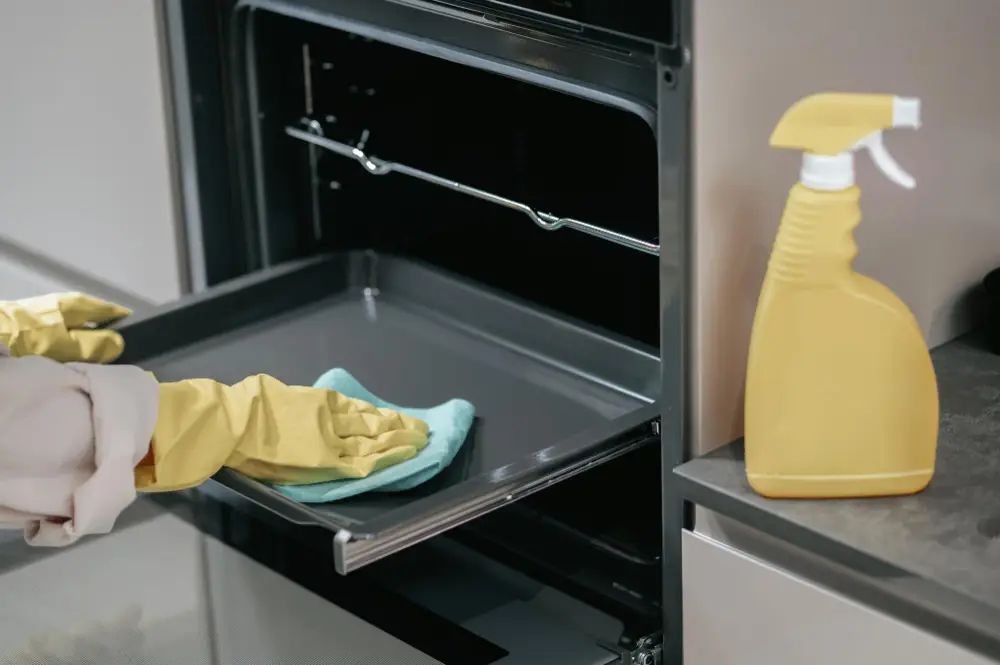
Most store-bought oven cleaners come with warning labels that read like a chemistry lab safety sheet. Sodium hydroxide, butane propellants, and degreasers that strip oil off concrete. The fumes can knock you over, the residue can stay in the oven long after you wipe it down, and the gloves you wear feel like they’re barely keeping the stuff off your skin. There’s a better way.
The natural methods work. They take a little more time, but they cost almost nothing, smell fine, and don’t fill your kitchen with toxic vapors. Here’s how to get a clean oven without the chemical hangover.
Why Oven Grease Is Hard to Clean
Oven grease isn’t just leftover oil. It’s oil that got heated past its smoke point, mixed with food particles, and baked onto a surface at 400 degrees. That process polymerizes the fat into a kind of varnish that bonds to the metal. Wiping it doesn’t work. Scrubbing barely makes a dent. The grease needs to be broken down chemically before it’ll come off.
The harsh cleaners use strong alkaline compounds to cut through that bond. Natural methods use the same principle but with gentler ingredients that take a bit longer to do the same job.
The Baking Soda & Vinegar Method
This is the gold standard for natural oven cleaning. It works on light buildup and on the kind of carbon you’ve been ignoring for two years.
Step 1: Empty & Prep
Take out the racks. Set them aside for separate cleaning. Remove any loose food bits from the bottom of the oven with a paper towel or a damp rag. If there’s a layer of charred crumbs, scrape them out with a plastic scraper.
Step 2: Make the Paste
Mix half a cup of baking soda with two to three tablespoons of water in a bowl. Stir until it forms a spreadable paste. The consistency should be thick enough to stick to vertical surfaces but loose enough to spread with a spatula or a gloved hand.
Step 3: Apply
Spread the paste on every interior surface of the oven. Hit the sides, the back wall, the top, and the bottom. Avoid the heating elements and any visible electrical components. Be generous on heavily soiled spots. The paste will turn a brownish color as it reacts with the grease.
Step 4: Let It Sit
Leave the paste on overnight, or at least twelve hours. The longer it sits, the more grease it breaks down. This is the secret. Most people rush this step and wonder why the method doesn’t work.
Step 5: Wipe & Spray
The next morning, use a damp cloth or sponge to wipe out as much of the paste as you can. Pour distilled white vinegar into a spray bottle and mist any spots where baking soda residue remains. The vinegar reacts with the baking soda and foams up, which lifts the last of the grease. Wipe everything down with a clean damp cloth until the surfaces are dry and smooth.
Other Natural Options
The baking soda method works for most situations, but a few alternatives handle specific problems better.
Lemon Juice & Water Steam
Fill an oven-safe bowl with water and the juice of two lemons, plus the squeezed-out lemon halves. Set the bowl in the oven at 250 degrees for thirty minutes. The steam softens grease and food residue, making it easier to wipe out. This method is best for light maintenance cleaning between deeper sessions. It won’t touch heavy carbon, but it freshens the oven and loosens easy buildup.
Salt for Fresh Spills
If a pie bubbles over or cheese drips off a pizza while the oven is still hot, sprinkle salt on the spill right away. The salt absorbs the liquid and turns the burned-on mess into a powder you can wipe out once the oven cools. It saves you from a much harder clean later.
Cream of Tartar Paste
For stainless steel oven interiors or for tough spots that the baking soda paste didn’t fully clear, make a paste of cream of tartar and water. Cream of tartar is slightly acidic and cuts through specific kinds of buildup that baking soda struggles with. Apply, let sit for thirty minutes, scrub gently, and wipe.
Cleaning the Racks Separately
The racks need their own treatment because they have a different kind of grease pattern.
Fill the bathtub with hot water and add half a cup of dish soap plus a cup of baking soda. Stir to dissolve. Place the racks in the water and let them soak for at least four hours, or overnight. Scrub with a stiff brush or a scrubbing pad. Most of the grease will come off easily after the soak. Rinse and dry before putting them back in the oven.
If you don’t have a bathtub or want to skip the tub method, lay the racks on old towels in a large container or even on the grass outside. Sprinkle baking soda over them, then spray with vinegar. Let the foam work for several hours, then scrub.
Cleaning the Door Glass
The inside of the oven door glass collects a thick film of cooked-on grease that obscures the view inside.
Make a thicker baking soda paste, almost like a frosting consistency. Spread it over the glass and let it sit for fifteen to twenty minutes. The paste lifts the film. Wipe with a damp cloth, then polish with a clean dry cloth or paper towel. For stubborn spots, use a plastic scraper at a low angle to lift the residue without scratching the glass.
Bonus: The Stovetop & Hood
While you’re at it, hit the stovetop with the same baking soda paste. Apply, wait an hour, wipe. For the hood and the filter underneath, soak the filter in hot water with dish soap and baking soda for an hour, then scrub. The grease comes off in sheets.
How Often to Clean the Oven
Light oven users can get away with a deep clean every six months. Heavy users who roast, bake, and broil multiple times a week should plan on every two to three months. Spot-clean spills right away to keep buildup manageable.
A regular oven that gets used and cleaned on this schedule will stay in good shape for years. An oven that gets ignored for three or four years often needs professional attention because the buildup gets to a point where even the strongest natural methods can’t fully restore it.
When the Buildup Is Too Much
If your oven hasn’t been cleaned in a long time and the baking soda method is barely making progress, it might be time to hire a cleaning crew. Professional cleaners have steamers, longer dwell times, and specialty pads that handle extreme buildup without harsh chemicals. It’s a good reset, and from there the natural methods will hold the line going forward.
A clean oven cooks better, runs more efficiently, and lasts longer. Skipping the harsh chemicals doesn’t mean settling for a dirty oven. It just means working with the right ingredients and a little patience.