Construction dust looks like regular house dust. It settles on surfaces, floats in light beams, and gets wiped away with a rag. The problem is that it’s nothing like the dust your house normally produces. What gets kicked up during a renovation, an addition, or a new build carries particles that can do real damage to your lungs, your eyes, and your long-term health. Pretending it’s harmless because you can’t see all of it is how people end up with chronic breathing problems years after a project wraps.
Here’s what’s actually in that dust and what it can do.
What’s Actually in Construction Dust
The mix depends on what got cut, drilled, sanded, or demolished. Most construction sites produce a cocktail of fine particles that vary in size and toxicity.
Silica
Silica dust comes from concrete, brick, mortar, stone, and tile. Anytime a saw cuts these materials, fine silica particles get released into the air. Silica is the most dangerous component of most construction dust because the particles are small enough to bypass your nose and throat filters and travel deep into the lungs.
Wood Dust
Wood dust comes from cutting, sanding, or routing lumber. Softwoods like pine release lower-risk particles, but hardwoods and engineered woods like MDF and plywood release dust that contains formaldehyde and other binding chemicals. Long exposure to wood dust raises the risk of nasal cancer in workers, and even occasional exposure can trigger allergic reactions.
Drywall & Gypsum
Drywall dust looks like white powder and feels almost soft, which makes people underestimate it. Cutting, sanding, or breaking drywall releases gypsum particles plus whatever joint compound was on the wall. These particles are alkaline, which means they irritate skin, eyes, and lung tissue on contact.
Paint, Adhesive, & Finish Particles
Sanding old paint can release lead if the home was built before 1978. Newer paints release particles with solvent residues. Adhesives, sealants, and floor finishes shed particles during application and demolition that carry volatile organic compounds.
Short-Term Health Effects
The first signs of dust exposure show up fast, usually within hours of being in the space.
Eye, Nose, & Throat Irritation
Dust particles land on mucous membranes. Eyes water and itch. Noses run or get blocked. Throats get scratchy and sore. People often blame allergies or a cold, but the timing matches their time in the dusty space.
Asthma & Breathing Triggers
People with asthma get hit hardest by construction dust. Even fine particles at moderate concentrations can trigger wheezing, tightness in the chest, or full asthma attacks. People without asthma can develop dust-induced reactive airway symptoms after enough exposure, which can stick around for weeks.
Skin Reactions
Direct contact with drywall, fiberglass insulation, and cement causes itching, redness, and sometimes burns. Workers wear gloves and long sleeves for a reason. Anyone walking through a dusty space without protection can pick up the same reactions.
Long-Term Risks
The short-term stuff goes away. The long-term risks build up over years and aren’t reversible.
Silicosis
Inhaling silica dust over time causes silicosis, a scarring of the lungs that limits breathing capacity permanently. Severe cases lead to disability or death. Construction workers are the main risk group, but homeowners living in a space during heavy renovation can pick up enough exposure to cause damage too.
Chronic Obstructive Pulmonary Disease
Long exposure to mixed construction dust raises the risk of COPD, which includes chronic bronchitis and emphysema. COPD makes simple activities like climbing stairs or walking briskly difficult. The damage shows up decades after the exposure, which is why people don’t connect it to a renovation they did in their twenties.
Lung Cancer
Silica dust and wood dust are both classified as carcinogens. Repeated exposure raises the lifetime risk of lung cancer and nasal cancer. The risk goes up with the amount and duration of exposure but no level is fully safe.
Why It Lingers After the Crew Leaves
The trickiest part about construction dust is that it doesn’t go away when the work stops. Fine particles stay airborne for hours after they’re disturbed. They settle on every flat surface, slip into HVAC systems, hide in carpets, and coat the inside of cabinets. A space that looks clean to the eye can still be loaded with dust that gets kicked back into the air every time someone walks across the room or opens a closet.
The dust also moves through the house. If a contractor cuts tile in one room, dust travels through doorways, up stairs, and through the HVAC return vents to every other room in the building. Closing doors helps but doesn’t stop it completely. Plastic sheeting helps more but only if it’s sealed tight.
How to Actually Clean Post-Construction Dust
Regular cleaning won’t get it. A broom kicks dust back into the air. A dry duster moves it around. A normal vacuum without a HEPA filter blows the finest particles right back through the exhaust.
Post-construction cleaning uses different tools and a different order. HEPA-filter vacuums pull in fine particles and trap them instead of recirculating them. Damp microfiber cloths catch and hold dust instead of pushing it. Work goes top-down: ceilings, light fixtures, walls, cabinets, counters, and floors last. Every flat surface gets two passes, often three. HVAC vents get vacuumed and the filter gets replaced. Carpets get deep-cleaned or steam-cleaned. Windows and tracks get wiped.
The whole process for a single room takes three to six hours of focused work. For a full home renovation, it’s a multi-day project.
When to Bring In a Post-Construction Crew
Most homeowners underestimate how much work post-construction cleaning takes. The instinct is to wipe down what’s visible, vacuum the floors, and move on. That approach leaves the fine particles behind, and those are the ones that cause the real damage over time.
Hiring a crew that specializes in post-construction cleaning makes sense for any project that touched more than one room or involved cutting, sanding, or demolition of any kind. They bring HEPA equipment, they know where dust hides, and they finish the job in a fraction of the time it would take a homeowner working evenings and weekends.
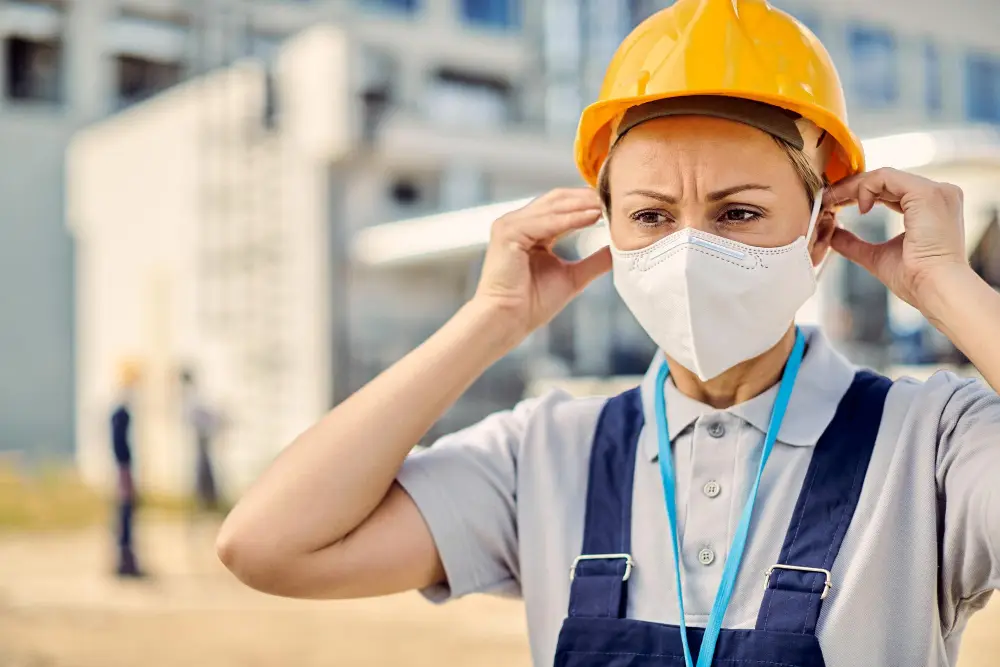
If you’re doing a renovation yourself and can’t hire help, at minimum invest in a HEPA vacuum, N95 or P100 masks for everyone in the home, and plastic sheeting to seal off work zones during the project. Run air purifiers with HEPA filters in occupied rooms for at least a few weeks after the work ends.
Construction dust is one of those risks that gets dismissed because the damage shows up later. By the time someone develops silicosis or COPD, the renovation is a distant memory. Treating the cleanup as part of the project, not an afterthought, protects everyone in the home for the long haul.