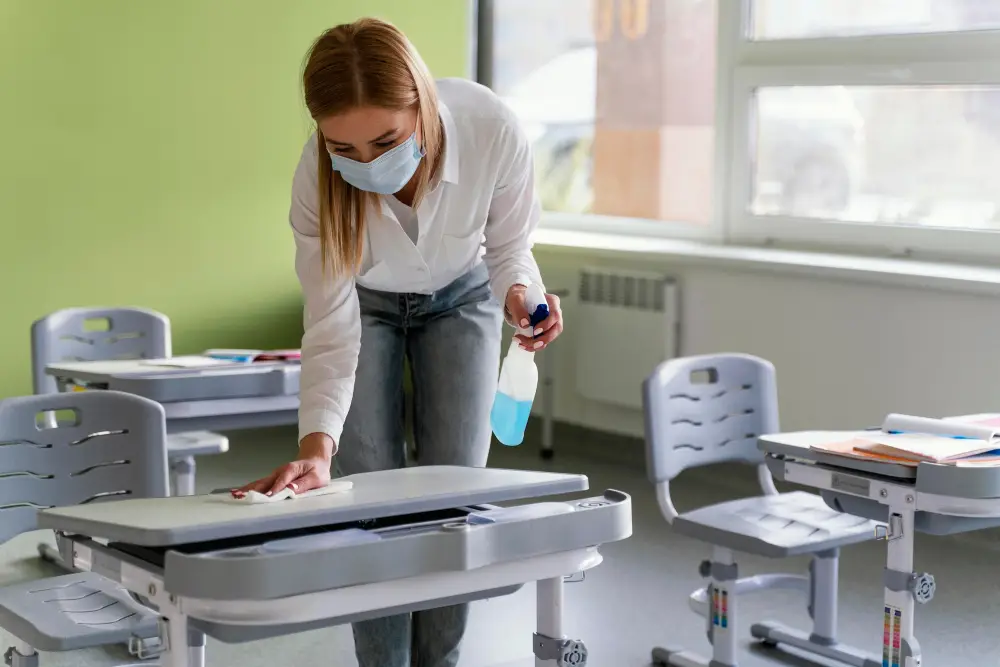
Schools pack a lot of people into a small space for hours at a time. Hundreds of kids touch the same doors, share the same desks, and breathe the same air all day long. That setup makes a school one of the easiest places for germs to spread, and it makes cleaning one of the quiet jobs that keeps the whole place running. When a school stays clean, fewer kids and teachers get sick, and more of them stay in the classroom where they belong.
This post looks at why school cleaning matters so much, which areas need the most care, and how a steady plan keeps students and staff healthy through the year.
Why Schools Spread Germs So Easily
Kids are not known for keeping their hands to themselves. They touch everything, share supplies, and forget to wash up more often than not. Put a few hundred of them in one building and germs move fast. One sick student in a classroom can pass a bug to half the room before lunch.
The buildings themselves add to it. Shared desks, common restrooms, packed hallways, and cafeterias bring everyone into contact with the same surfaces over and over. Without regular cleaning, those surfaces turn into the main road germs use to get from one person to the next.
The Areas That Need the Most Care
Some parts of a school carry more risk than others. Focusing the cleaning effort on these high-traffic, high-touch zones does the most to keep illness down.
Classrooms
Classrooms are where students spend most of the day. Desks, chairs, shared supplies, and door handles all get touched constantly. Wiping down these surfaces daily, and disinfecting the high-touch ones more than once, keeps a single sick kid from turning into a sick class.
Restrooms
School restrooms see heavy use and spread germs fast when they fall behind. They need frequent cleaning, restocking, and disinfecting through the day, not just once after the final bell. A clean, well-stocked restroom also encourages kids to actually wash their hands, which helps the whole building.
Cafeterias
The cafeteria brings the entire school together around food, which makes it a hot spot for germs. Tables need cleaning between groups, and the floors and surfaces need attention after every meal period. Food residue draws pests too, so staying on top of it matters for more than one reason. The kitchen and serving areas behind the scenes need the same care, since that is where the food is handled before it ever reaches a tray.
Clean Air Matters in a Classroom
Cleaning is not only about surfaces. The air in a packed classroom affects how kids feel and how well they learn. Dust builds up in vents and on surfaces, and stale air leaves students foggy by the afternoon. Allergens trapped in carpets and corners make things worse for the kids who already struggle with them.
Regular cleaning pulls dust and allergens out of the room before they build up. Cleaner air means fewer headaches, fewer allergy flare-ups, and students who can focus on the lesson instead of a stuffy nose. Teachers feel the difference too, since they breathe the same air for the same number of hours.
Keeping Up Through Cold & Flu Season
The toughest stretch of the school year is the cold and flu season. This is when germs move fastest and absences pile up. A school that ramps up its cleaning during these months keeps more kids and teachers healthy and in the building.
During this stretch, high-touch surfaces need disinfecting more often than usual. Door handles, light switches, shared devices, and desks all need extra attention. Staying ahead of the spread during these weeks can be the difference between a few sick days and a classroom half-empty for a month.
The Cost of Falling Behind
When cleaning slips, the results show up fast. Absences climb, both for students and the staff who have to cover for sick coworkers. Learning suffers when kids miss days and teachers run on empty. A clean school is not just a health matter. It keeps the whole place working the way it should, with everyone present and ready to do their part.
Building a School Cleaning Routine
A good routine splits the work by how often each task needs doing, so nothing gets missed during the rush of a school day.
Daily tasks cover the basics: classrooms, restrooms, cafeterias, trash, and high-touch surfaces. These keep the building presentable and safe from one day to the next. Weekly tasks go deeper into floors, windows, and the spots that build up slower. Deeper work on a longer cycle handles vents, carpets, and the corners that daily cleaning skips.
Timing matters in a school. The heavy cleaning happens after hours, once the kids and staff have gone home, so it never gets in the way of the day. A daytime presence handles spills, restroom restocking, and the messes that come up while school is in session.
Why Educational Institution Cleaning Calls for a Plan
Educational institution cleaning is a big job, and it rarely works well when it gets split among staff who already have full plates. Teachers have lessons to run, and office staff have their own work. Asking them to keep a whole building clean on top of that means the cleaning gets skipped on busy days, which is most days.
A dedicated crew handles the job on a set schedule with the right tools and products. They know which surfaces need disinfecting, how often, and how to work around the school day. That keeps the building safe and frees the staff to focus on the students.
What to Look for in a Crew
Look for a team with experience in schools, since these buildings have their own rhythm and rules. Ask how they handle high-touch surfaces, how they adjust during flu season, and what products they use around kids. A crew that knows schools will have ready answers and a plan that fits the way a school actually runs. It also helps to find a team that can work around the school calendar, ramping up during the year and handling the deeper resets over breaks when the building sits empty.
To Wrap Things Up
Schools bring a lot of people into close contact all day, which makes them easy places for germs to spread and important places to keep clean. Classrooms, restrooms, and cafeterias carry the most risk and need the most care, while clean air keeps kids focused and healthy. The cold and flu season calls for extra effort on high-touch surfaces, and falling behind shows up fast in absences and lost learning. Educational institution cleaning works best with a real plan and a dedicated crew, so the staff can focus on teaching while the building stays safe. A clean school keeps more students and teachers healthy, present, and ready to learn.