
Most people have worked at a messy desk at some point and felt the drag that comes with it. Papers pile up, the trash can overflows, and somewhere under it all sits the thing you actually need. A workspace like that does more than look bad. It chips away at focus and makes the whole day feel heavier. The state of an office and the work that gets done in it are tied together more closely than people tend to think.
This post looks at how a clean office affects the people who work in it, which areas matter most, and how to keep the place in shape without turning it into a chore for the team.
The Cost of a Messy Workspace
A cluttered office does not just slow down one person. It spreads. Shared spaces get worse over time, small messes pile into big ones, and the whole team starts to work around the mess instead of through it.
Clutter Pulls Focus
The brain reacts to what it sees. A desk covered in clutter gives the eyes too much to track, and that steady low-level distraction makes it harder to stay on one task. Clear the surface and the mind has fewer things tugging at it. People finish work faster when they are not hunting for a pen or shoving papers aside to find room to type.
Mess Adds Stress
A dirty office wears on people in a quiet way. Walking into a space that smells stale or looks neglected sets a sour tone before the workday even starts. Over weeks and months, that low hum of stress adds up and drains the energy people would rather spend on their actual jobs.
How Clean Air Keeps People Sharp
Air quality is one of the easiest things to ignore and one of the things that affects focus the most. Dust builds up in vents and on surfaces, carpets trap allergens, and stale air leaves people foggy by mid-afternoon. Regular cleaning pulls dust out of the room before it spreads, and that keeps the air easier to breathe.
People think more clearly when the air is fresh. Headaches drop, eyes feel less heavy, and that afternoon slump softens. None of this shows up on a report, but everyone can feel the difference between a room that has been cleaned and one that has been left alone for weeks.
Fewer Sick Days, More Work Done
Offices are full of shared surfaces. Door handles, keyboards, phones, and break room counters all pass germs from one person to the next. When one person comes in sick, that bug can move through a whole team in a matter of days.
Regular cleaning and disinfecting of high-touch spots cuts down how fast illness spreads. Fewer sick days means more people at their desks doing the work, and it means the people who are there are not picking up someone else’s cold. The math here is simple. A clean office keeps more of the team healthy and present.
Spaces That Affect the Whole Team
Some parts of an office touch every single person who works there. These shared zones set the mood for the building, and when they slip, everyone notices.
Shared Kitchens & Break Rooms
The break room is where people step away to recharge. A sticky counter, a sink full of dishes, or a fridge nobody has cleaned in months turns that break into something unpleasant. A clean kitchen gives people a real reset, and they come back to their desks in better shape.
Restrooms
Few things drag down morale faster than a poorly kept restroom. Staff use these spaces all day, and a dirty one sends a message that the workplace does not care. Keeping them stocked and clean is one of the most basic ways to show the team some respect.
Meeting Rooms
Meeting rooms host clients as well as staff. Crumbs on the table, smudged glass, and full trash bins make a poor impression during the moments that matter most. A clean room keeps the focus on the conversation instead of the mess.
Setting Up an Office Cleaning Routine
A good routine splits the work by how often each task needs doing. That way nothing gets missed and nothing gets over-done.
Daily work covers the basics that show wear fast: trash, restrooms, kitchen counters, and high-touch surfaces. Weekly work goes after the things that build up slower, like floors, glass, and desks. Deeper work on a monthly or seasonal basis handles vents, carpets, and the corners that daily cleaning skips.
The timing matters as much as the task. Cleaning after hours or early in the morning keeps the work from getting in the way of the team. Nobody wants a vacuum running during a call or a mop blocking the hallway in the middle of the day. Off-hours cleaning keeps the office ready when people arrive and out of the way while they work.
The Office Cleaning Productivity Benefits Add Up
Each of these pieces on its own seems small. Clearer air, cleaner surfaces, fewer germs, tidier shared spaces. Put them together and the office cleaning productivity benefits start to stack. People focus better, get sick less, and feel better about the place they spend most of their waking hours.
There is also a quieter payoff. When the office stays clean, the team treats it better. People tend to keep a tidy space tidy and let a messy one get messier. A clean baseline sets a standard that the staff helps hold up on their own.
When to Bring In Outside Help
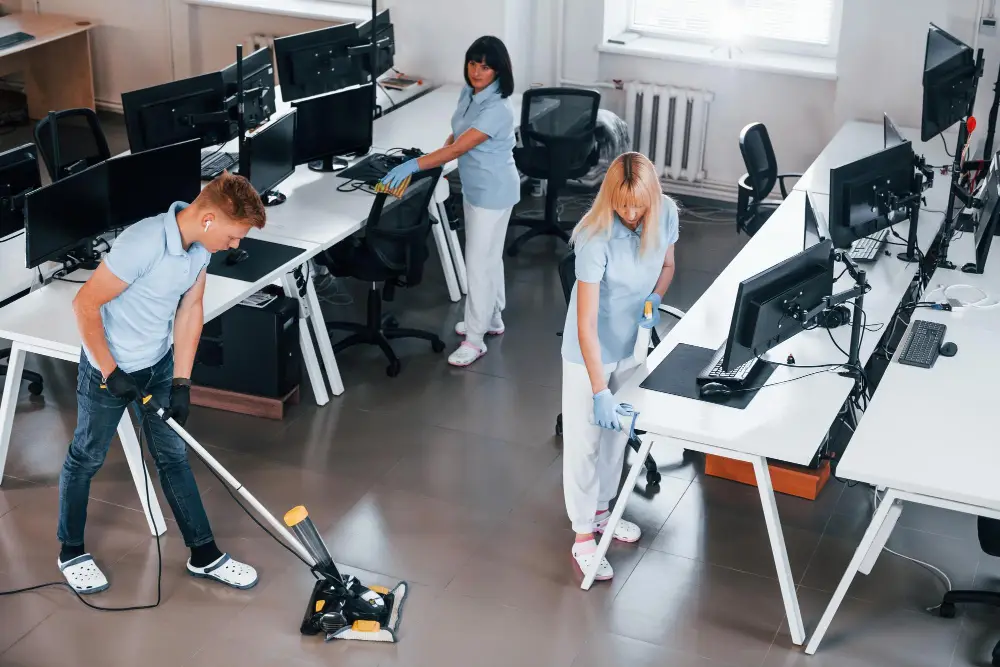
Plenty of offices try to split cleaning duties among staff. That works for a tiny team, but it falls apart as the headcount grows. Asking employees to scrub restrooms or haul trash pulls them away from the work you actually hired them to do, and it rarely gets done well.
A dedicated crew handles the job on a set schedule with the right tools and products. They know which surfaces need disinfecting, how to handle different floor types, and how to work around your hours. That frees the team to focus on their own work while the building stays in good shape.
The Takeaway
A clean office is not a luxury. It affects focus, health, mood, and the way a team works together day after day. Clutter and dust pull attention and wear people down, while clean air and clean surfaces keep them sharp and healthy. The shared spaces, kitchens, restrooms, and meeting rooms, set the tone for everyone. Build a routine around how often each task needs doing, keep the heavy work to off-hours, and the office cleaning productivity benefits show up in steadier focus and fewer sick days. A clean office gives people one less thing to fight against, and that alone is worth the effort.