The phrase hospital grade disinfection gets used a lot in cleaning ads, and it is easy to assume it only matters if you run a clinic. That is not the case. The term points to a level of germ-killing power measured by lab testing, not to the type of building you own. An office, a gym, a restaurant, or a warehouse can all get the same standard of treatment. This piece breaks down what the label actually means and how you bring that level of clean to your own space.
What Hospital-Grade Really Means
A disinfectant earns the hospital-grade title by passing tests against a set list of germs. To carry that claim in the United States, the product has to be registered with the EPA and prove it can kill specific bacteria, including the kinds tied to infections that spread in care settings.
So the phrase is about the product and the method, not the address. When a crew uses an EPA-registered, hospital-grade disinfectant and applies it the right way, the result is the same in your break room as it is in an exam room. The germs do not know where they are.
Why It Is Not Just for Hospitals
Any place where people gather sees the same germs move around. A shared keyboard in an office, a locker room bench, a school desk, and a checkout counter all collect bacteria and viruses through the day. The volume of traffic matters more than the label on the door.
Businesses reach for this level of clean when they want to cut down on sick days, protect customers, or meet the expectations of clients who care about safety. After a flu wave or a stomach bug runs through a staff, a stronger treatment helps stop the next round before it starts.
The Parts That Make It Work
Getting a true hospital-grade result comes down to a few things done in the right order. Miss one and the rest loses value.
The Right Product
Not every cleaner is a disinfectant, and not every disinfectant kills the same germs. The label lists which organisms it is proven against and how it is registered. Matching the product to the germs you worry about is the first step.
Contact Time
Disinfectants need to stay wet on a surface for a set number of minutes to do their job. This is called contact time or dwell time. Wiping the product off too soon leaves live germs behind, even though the surface looks clean.
Full Coverage
A disinfectant only kills what it touches. Missed edges, backs of handles, and the undersides of shared items become the spots where germs hang on. Even application is what turns a good product into a good result.
How Electrostatic Application Fits In
This is where the sprayer earns its keep. A hospital-grade disinfectant is only as good as the coverage it gets, and coating every angle of a room by hand takes a long time.
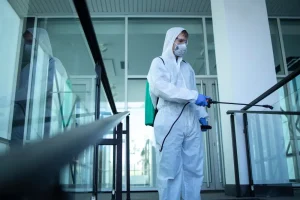
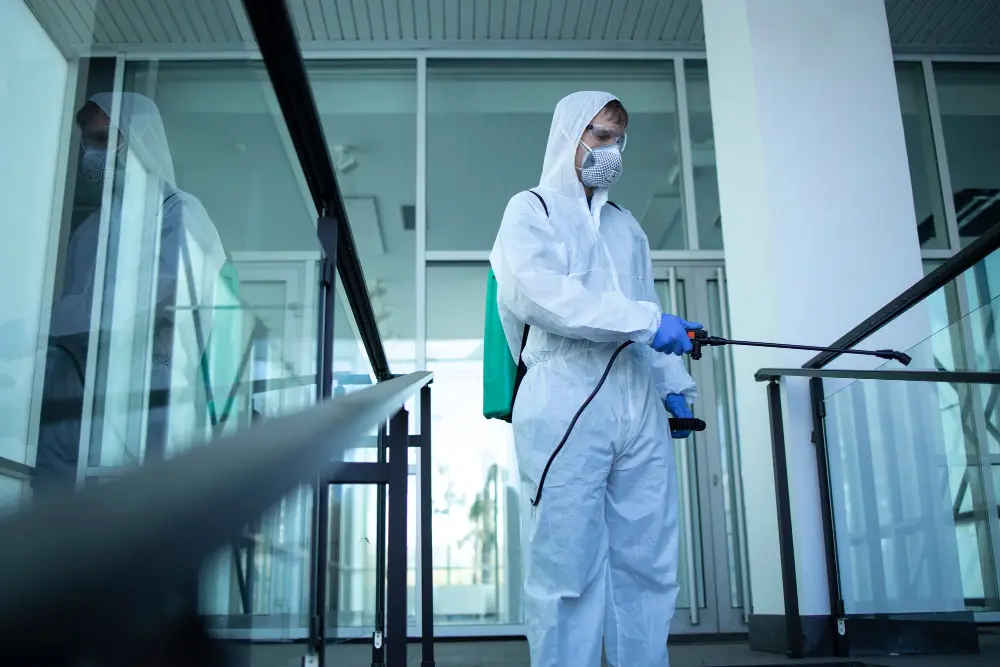
Electrostatic spraying charges the droplets so they cling to surfaces from all sides, which solves the coverage problem in far less time. Pairing a strong, EPA-registered product with even electrostatic application gives you the germ-killing power of the disinfectant and the reach of the mist at the same time. That combination is how many buildings get clinic-level results without a clinic-sized crew.
Where This Level of Clean Pays Off
Some settings gain the most from stepping up to this standard, usually because of who uses them or how much traffic they get.
Fitness centers deal with sweat, shared equipment, and constant contact, so a stronger disinfectant keeps the machines and mats in better condition. Childcare centers and schools move a lot of germs through small hands. Restaurants and food prep areas have both health rules and customer trust on the line. Medical and dental offices, of course, have a baseline they must meet every day.
Warehouses and offices sit a little lower on the list, but even there a periodic deep treatment during cold season makes a real difference in how many people stay healthy.
What This Does Not Replace
Stepping up to hospital-grade disinfection does not mean you can drop routine cleaning. The two do different jobs. Regular cleaning removes the dirt, dust, and grime you can see, while disinfection kills the germs you cannot. A disinfectant works best on a surface that has already been wiped clean, since leftover grime shields germs from the product.
Think of it as a pair rather than a swap. Daily cleaning keeps the space looking cared for and clears the way for the disinfectant to reach what it needs to. Skipping the cleaning step and going straight to a strong disinfectant leaves you with a surface that looks treated but is not fully protected. The order matters as much as the product.
Building It Into a Routine
You do not have to treat every surface at this level every day. Most facilities run standard cleaning as the baseline, then schedule hospital-grade disinfection on a set rhythm or after a known exposure.
A common setup is a recurring disinfection visit paired with extra passes during high-risk stretches of the year. That way you get the stronger protection when it counts without paying for it around the clock. The key is having a plan rather than reacting after an outbreak has already spread.
Getting Started
Hospital-grade does not mean complicated, and it is well within reach for almost any building. It comes down to using a proven product, giving it the time it needs, and covering every surface that matters.
If you are not sure what level of disinfection your space calls for, our team can take a look and give you a straight answer. We will match the product and the schedule to your traffic and your goals, so you get the protection you need without paying for treatment you do not. Reach out for a walkthrough and a clear quote whenever you are ready.